Tuesday, April 23, 2013

Publishing the best in award-winning contemporary British fiction

Since we started publishing in 2005, Valancourt Books has aimed to bring readers the best in neglected and out-of-print Gothic & horror fiction, gay-interest literature, and neglected literary classics.  Recently, we've been amazed to discover that a great deal of critically acclaimed, award-winning British fiction of the 20th century is out of print and often nearly unobtainable, and we wanted to take this opportunity to spotlight some of the recent additions to our list:

Booker Prize

Founded in 1968, the Booker Prize has become the world's most-watched literary event each year. Valancourt Books is thrilled to announce a new U.S. edition of David Storey's Booker winner Saville (1976), which The Observer has called 'the best of all the Bookers'.  Valancourt will also be reprinting Storey's brilliant Pasmore (1972), shortlisted for that year's Booker Prize, and his Radcliffe (1963), in a 50th anniversary edition.


Saville (1976)

"Reading this magnificent book is like drinking pure spring water from cupped hands. It has no false notes, no heaviness of emphasis, no editorial manipulations of plot to prove a point. One becomes so totally involved in the lives of these people that their every word and action becomes charged with meaning. . . . Reminiscent of a nineteenth-century classic." - The Sunday Times

"Mesmerically readable, Saville is a revelation. It is alive with light and a kind of perpetual motion." - The Times

"Saville is not one word too long. It was worth the ten years it took to write for the result of this industry is a clarity of style and a purity of design. . . . An epic narrative, crowded, naturalistic, and riveting." - The Evening Standard

"Not once during its 506 pages did the familiar man with the stop-watch intervene to challenge my total immersion in the life of Colin Saville." - New Statesman

"A major achievement." - Times Literary Supplement

"No one has written of this classic dilemma with such detail and penetration as we find in Saville." - The Listener


Pasmore (1972)
Shortlisted for the Booker Prize

"Swift, clean and painful . . . as good as anything he has done." - Sunday Times


"Memorable." - New York Times

"Violent, shocking, a huge novel, the explosive story of a strange passion . . . a climax never before described in fiction." - Sunday Times

Also forthcoming is Barry England's classic thriller Figures in a Landscape (1968), shortlisted for the inaugural Booker Prize and long out of print.  The novel tells the story of two prisoners who escape in an unspecified country and flee the pursuit of a black helicopter.  The Daily Mail said it 'achieves a tension that is almost unbearable.'


Somerset Maugham Award

The great British novelist and short story writer Somerset Maugham began this award in 1947; it is awarded each year to the writer under the age of 35 of the best book of the past year.  Valancourt Books is proud to be issuing several Somerset Maugham Winners, including the following:


The Dividing Stream (1951) by Francis King
With a new introduction by Paul Binding

"A young novelist on whose future I would willingly gamble . . . I strongly recommend this book." 
- C. P. Snow, Sunday Times

"A most enviable achievement. . . . This author is a genuine novelist whose future work is of importance to the life of the English novel." - Compton Mackenzie

"I find this novel rare, and indeed astonishing." - The Observer


Play Things (1972) by Peter Prince
With a new foreword by the Author

"It is exciting, relevant, a wholesale gift for the top-notch department." - Books and Bookmen

"Agreeably readably ... light-hearted throughout, and altogether this book is a promising beginning to Mr. Prince's career as a novelist." - The Listener
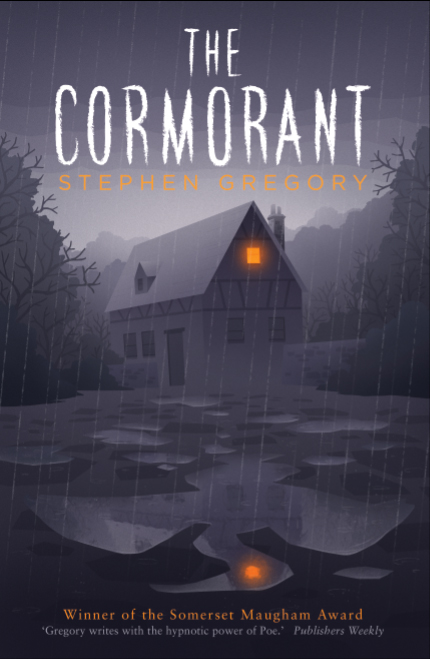


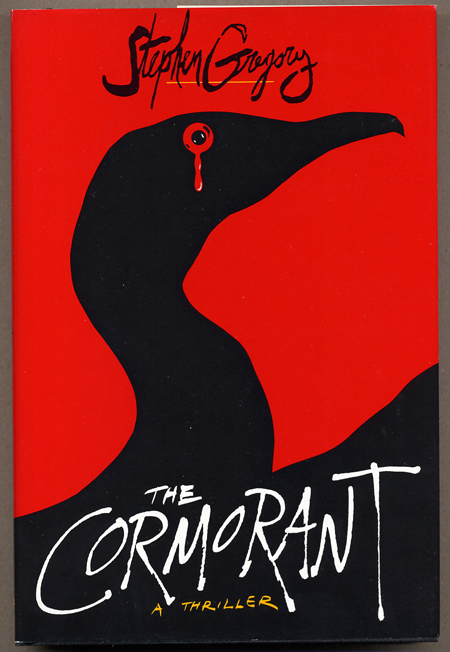
The Cormorant (1986)
by Stephen Gregory
With a new introduction by the author

'[An] artful first novel, reminiscent of the tales of Poe . . . Gregory uses a low-key style and subtle lyricism to build an atmosphere of nightmarish horror in a tale that could become a classic.' - Publishers Weekly 

'[A] first-class terror story with a relentless focus that would have made Edgar Allan Poe proud.' - New York Times 

'[N]o summary can do justice to the subtlety of Gregory's first novel, with its fresh, vivid, sensual prose and its superb descriptive and evocative power. An extraordinary novel - original, compelling, brilliant.' -Library Journal 

'A work of tremendous self-assurance that leaves the reader with a lingering sense of unease and announces the arrival of a considerable new talent.' - British Book News 


James Tait Black Memorial Prize

The oldest annual literary prize in Great Britain, the James Tait Black Memorial Prize has been awarded to the best novel published each year since 1919, and previous winners have included D. H. Lawrence, E. M. Forster, J. B. Priestley, Aldous Huxley, Iris Murdoch, and many other extremely famous writers.  Valancourt Books is proud to be publishing the following James Tait Black winners:


Young Tom (1944), as part of the Tom Barber Trilogy
by Forrest Reid
Edited by Michael Matthew Kaylor


The Ha-Ha (1961)
by Jennifer Dawson

"A remarkably talented first novel . . . [the] heroine is a convincing and sympathetic character, and when her mind begins to shift into the nightmare perspective of schizophrenia the writing creates an atmosphere of quiet terror." - Observer

"Cool, short, tender and occasionally as prettily ruthless as the impact of a stiletto heel . . . twice as alarming because everything is implied rather than explicit." - Tatler

"Interesting, haunting novel." - New Statesman

"A writer of marked originality." - Punch

"A novel about madness which succeeds completely." - Daily Telegraph

"A little masterpiece." - Bookman

"An extraordinary achievement." - Listener

Tuesday, April 9, 2013

Valancourt Books Sale!

[UPDATE (5:30 PM 4/10/13): We're deleting books as people order them, so if it's still listed, it *should* still be available.]

I regret that these offers are only available to U.S. customers because of shocking recent increases in overseas mailing costs.  Uncorrected proof copies are in like-new condition but may contain a small number of typographical errors corrected for the final book, or may have variations in cover art.  Shipping is a flat $5 per order, regardless of how many books you order.

Overstock copies (1 of each unless otherwise noted, first come, first served):
G.W.M. Reynolds, The Mysteries of London ($20, reg. $30)
Charlotte Smith, The Story of Henrietta ($10, reg. $18)
Halloween Specials: James Jenkins the Miser ($5, reg. $10) & The Stranger Knight ($5; reg. $10)

"Scratch & Dent"
We have four copies of Stephen Gilbert's The Burnaby Experiments in new condition, missing their title page ($5 each)

Advance proof copies ($10 each; 1 of each; first come, first served):
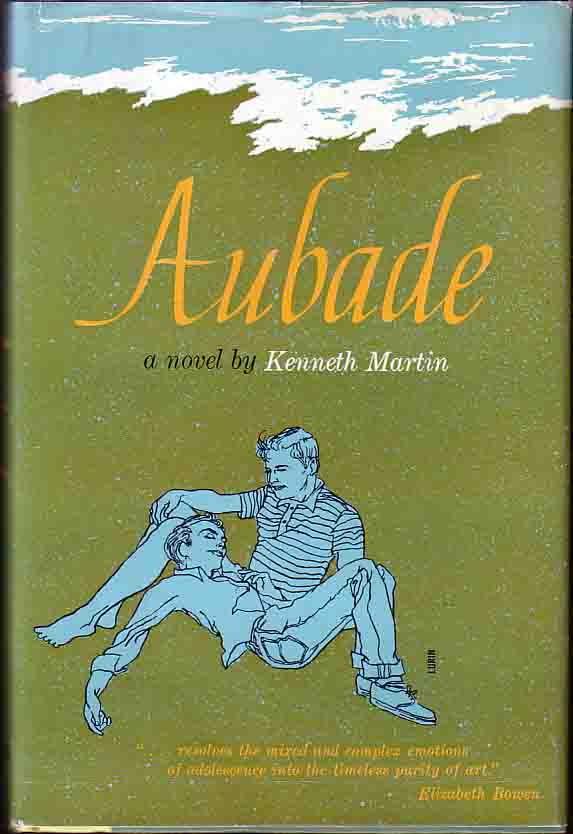
Kenneth Martin, Aubade
Kenneth Martin, Waiting for the Sky to Fall
Gerald Kersh, Nightshade and Damnations
Richard Marsh, The Complete Adventures of Sam Briggs

Message on Facebook or Twitter (@Valancourt_B) or contact us through the website form or via email to reserve any books you are interested in.  Thank you!


Friday, March 8, 2013

Spotlight on some forthcoming titles

Recently I joked to someone (perhaps unfunnily; my sense of humor leaves much to be desired) that Valancourt Books was looking to add a little diversity to its catalogue: by including some living authors.  Here are some of the titles by contemporary authors that we've recently added to our forthcoming list and which I think are really interesting:

The Fourth of June (1962)
by David Benedictus
Introduction by the Author

David Benedictus (b. 1938) published this novel at age 24 and it was an immediate bestseller and succès de scandale.  Ian Fleming (yes, that Ian Fleming) wrote for the Sunday Times that it was 'one of the most brilliant first novels since the war'; Kenneth Allsop for the Daily Mail called it 'brilliantly clever' and 'mercilessly funny'; Penelope Mortimer gave it 'almost unqualified praise', and in general the reviews were terrific.  The entire print run sold out and it was also published in paperback and in an American edition.


In The Fourth of June, Benedictus set out to savage one of the most august institutions in England -- Eton College, founded in 1440, and responsible for educating the sons of the noble and wealthy, including numerous prime ministers and other top British figures, for generations.  Scarfe, a 'guinea-pig', the son of a Norwich farmer, doesn't fit in among the sons of the gentry, and when he transgresses their code of conduct, they set out to teach him a lesson -- by beating him with a cane, resulting in paralysis and a great deal of consternation.  But don't let that fool you: the book is indeed terribly funny.  Benedictus is still writing; in 2009, he published the first Winnie the Pooh sequel in more than 80 years, Return to the Hundred Acre Wood.

The Cormorant (1986) 
by Stephen Gregory
With a new introduction by the Author

Another quite different but also hugely successful first novel was Stephen Gregory's (b. 1952) The Cormorant, which the New York Times said was 'a first-class terror story with a relentless focus that would have made Edgar Allan Poe proud'; Publishers Weekly recognised its 'nightmarish horror reminiscent of the tales of Poe, in a tale that could become a classic'.  It won the highly prestigious Somerset Maugham Award for 1987 and now returns to print in this new edition featuring an all-new introduction by the author.


In The Cormorant, a young husband and wife toil away in the city at jobs they despise in order to support themselves and their newborn baby, when they receive a bit of unexpected news. An eccentric old uncle has died and left them a sum of money and a remote cottage in Wales.  There's only one small catch: the uncle had rescued a cormorant from an oil spill and kept it as a pet, and the family can only keep their bequest as long as they care for the cormorant. They figure it's merely a minor inconvenience and might perhaps even be somewhat amusing. Until the cormorant reveals its malevolent side. The novel was adapted by the BBC as a motion picture starring a young Ralph Fiennes.


The Young Director (1961)
by Martyn Goff
With a new introduction by Dr Martin Dines

Martyn Goff (b. 1923) has made an immeasurable impact on modern British literature, but, curiously enough, not through his fiction writing. Instead, he is best known as the man responsible for the Man Booker Prize, which has probably replaced the Nobel Prize as the most-watched literary award in the world; he oversaw the formation of the award and supervised the process from 1969 until his retirement in 2002. But before this, he had a career as a novelist, publishing several very daring gay-themed novels in the 1950s and 1960s.

When he wrote his first novel, The Plaster Fabric (1957), his straight publisher told him, 'You know, this book could land both of us in the Old Bailey. You're not worried?'  He had reason to be: at the time, homosexuality was a criminal offence and was also potentially ruinous for a young writer starting out, and publishers and authors could be hailed into court on indecency charges for publishing books dealing frankly with it.  Goff published the book anyway, and when John Betjeman reviewed it favourably, 'the authorities could hardly condemn it', as Goff later remarked.


The Youngest Director followed in 1961 (and probably holds a special place in Goff's heart, since in 1968, a young man in Finland read the book and wrote a fan letter to Goff; the two have been partners ever since). It's a fascinating book, in which Leonard Bissel seems to have everything going for him: he's 32, owns a house in Chelsea, drives a sporty new MG, has just met the love of his life, and has just been named the youngest director of the Colorado Trading Corporation. There's just one problem. The chairman of the corporation keeps up with all the latest efficiency research from America and the data clearly show that married executives are more productive and reliable employees than unmarried ones, and pressure is brought to bear on Leonard: either he marries, or he'll find himself demoted or out of a job. The problem is, Leonard wants to live in a committed, monogamous relationship with John, a hotel porter; his family and employer do not know he is gay, and of course gay marriage is quite impossible. The novel is extremely well written and remains a fascinating read over 50 years later.

Body Charge (1971)
by Hunter Davies
With a new introduction by the author

This one's a little lesser known, but I really enjoyed it.  Hunter Davies has been a prominent figure in British popular culture for half a century now, first with his novel Here We Go Round the Mulberry Bush (1968), which became a major Hollywood film, and with his book on the Beatles, the only authorized biography of the band.  More recently, he's been known for his writing on football and his journalism.  In 1971, he published a curious book called Body Charge, which features a rather immature 30-year-old protagonist (rather in denial about being gay) who drives for a shady unlicensed cab company because he enjoys the flexible hours, which allow him plenty of free time for his favourite pastime: playing football, usually with teens about half his age.  In the course of his work, he picks up three different interesting fares, an egocentric bisexual TV producer, an aspiring young football star, and a closeted gay married man with a couple of kids.  As he becomes mixed up with these different individuals, he also finds himself involved in the midst of a murder investigation. An unusual book, but compulsively readable and oddly compelling.

It unfortunately appeared in the early 1970s, one of the lowest points ever in the history of British book design, as evidenced by one of the least appealing covers we have ever seen.


Wednesday, February 27, 2013

Rediscovering the works of Kenneth Martin

Recently, and quite by accident, I discovered a couple of novels published during the 1950s by a writer named Kenneth Martin.  I happened upon him when I noticed that one of his books, Aubade (1957), was included in the Gay Men's Press series of Gay Modern Classics from the 1980s; I then saw that he had published another book, whose title for some reason grabbed my attention, Waiting for the Sky to Fall (1959).  Waiting had never been republished, and I didn't know anything about it, so I grabbed it from the library on a whim.  All I knew about the author was the statement on the back cover of the Aubade reprint that he had been 16 when he wrote that novel; my rudimentary math skills told me he'd have been 18 then when he wrote Waiting.


I started reading Waiting and was immediately struck by it.  For a novel written by an 18 year old, it was extremely striking, and some parts of it were really excellent.  The main character, an aspiring writer, was obviously in some respects autobiographical, and the two interesting gay characters, Jonathan and George were presumably based on people the young author must have known.  

Again making use of my limited math skills, I did some calculations and decided that if the author was in his late teens in 1959, he'd be in his 70s today and might well still be alive.  Unfortunately, there was absolutely nothing to be found about him online: he had no website, no Wikipedia page.  The Gay Men's Press had gone belly up years ago, so writing to them would be no use.  And unfortunately, Kenneth Martin is not a terribly uncommon name.  


Nonetheless, with a couple hours of literary detective work online, I thought I had found him: there was a Kenneth Martin who'd be about the right age, living in San Francisco, working as a psychotherapist.  I had seen that Martin had published a novel in the 1980s with GMP that was set in San Francisco, so I figured this wasn't a bad bet.  I picked up the phone and called him.  I said, "Is this Kenneth Martin the novelist?"  After a noticeable pause, the man on the other end said yes.  I told him I was interested in reprinting Waiting for the Sky to Fall, and he said, "I'm surprised."  He told me he thought the book was dead and buried years ago and would never see the light of day again.

It wasn't till after I spoke with him the first time that I read the long introduction he wrote to the 1989 reissue of Aubade.  The story it tells is a very sad one.  Born in 1939, he was adopted into an impoverished family in Northern Ireland.  His family had no money, no education, and Martin ended up teaching himself most of what he knew by reading as many books as he could get his hands on.  He knew early on that he wanted to be a writer, and he dreamed of moving to London and being a wealthy and famous novelist there.  

Kenneth Martin (from the jacket of Aubade)

At age 16, he wrote Aubade, a short novel about a teenager who falls in love with a boy a few years older than himself.  The subject matter was daring, especially for a first novel by someone so young, but it would have been daring if written by almost anyone: homosexuality was illegal, and even writing about it could land an author and his publisher in court, as had happened to Walter Baxter and the Heinemann firm only a couple years earlier.  Martin tells the story in full in his introduction, but in short, Aubade was accepted for publication by Chapman and Hall, Dickens's publishers a century earlier, and with the advance he received, Martin moved to London.  Aubade was a surprise success, selling some 5000 copies and going into a second printing and an edition published in America.  Martin was immediately a minor celebrity, being interviewed for articles that couldn't mention what his book was actually about.


Waiting for the Sky to Fall was his second book, and was the novel he expected to cement his status as one of the most promising young writers of his generation.  Some of the reviews were good: one major newspaper said it was better than Nobel Prize winner Saul Bellow's Henderson the Rain King.  Somewhat surprisingly, the critic for the Catholic Herald was a fan; meanwhile, the Yorkshire Post named it one of the ten best novels of the year.  But many of the reviews were downright ugly and extremely discouraging, probably especially so for Martin, who was very young and sensitive. A third novel followed, also not successful, and Martin gave up fiction for journalism.  Eventually he moved to the United States, became an American citizen, and now works as a psychotherapist.  The devastating effect on him of the lack of success of Waiting for the Sky to Fall can be sensed poignantly in his introductions to the two novels, which will be republished by Valancourt in May 2013.

Valancourt is actively rediscovering and republishing important early British gay fiction, including works by Forrest Reid, Francis King, C.H.B. Kitchin, Michael Nelson, Walter Baxter, and others, and we are very pleased to be reissuing Martin's first two novels as part of our 20th century series.  Kenneth Martin is blogging about his novels and their republication at his new website: http://www.kennethmartinwriter.com.  More on Martin and our two new editions can be found here.

Sunday, January 20, 2013

A quick update

A quick update -- we have been extremely busy in January, having sent five books to the printers so far, with no end in sight!

Richard Marsh's The Complete Adventures of Sam Briggs (1904-15) is now available, and four more will be available shortly: Francis Lathom's The One Pound Note and Other Tales (1820), Claude Houghton's I Am Jonathan Scrivener (1930) and This Was Ivor Trent (1935) and Oliver Onions's The Hand of Kornelius Voyt (1939).

Headed to press very shortly will be Thomas Blackburn's The Feast of the Wolf (1971), Ronald Fraser's Flower Phantoms (1926), and James Malcolm Rymer's The Black Monk (1845).

Our 20th century list continues to grow and we are releasing the books as fast as we are able.  We are extraordinarily pleased to have added two titles by Colin Wilson: his first novel, Ritual in the Dark (1960) and The Philosopher's Stone (1969), both of which we were shocked to find were out of print.  We also discovered, somewhat by accident, the fine novels of Kenneth Martin, Aubade (1957), written when he was 16, and which was controversial on its release for its depiction of same-sex love between two young men, and Waiting for the Sky to Fall (1959). Both will feature introductions by the author.

We are planning to issue new releases at a feverish pace throughout 2013, so make sure to follow us not only here but on Facebook and Twitter for updates on all the newest developments.  

Sunday, December 9, 2012

Our 20th Century Classics List!

Here it is -- after about 2 months of work, scouring the length and breadth of the 20th century to find some of the best out-of-print books and working with agents and estates to secure permissions, we are able to announce the following titles as forthcoming.  Over the next few weeks and months, we'll be blogging about each author and title on the list, so keep an eye out.  In addition to the titles listed, we are presently attempting to get the rights to publish works by Beverley Nichols, Thomas Hinde, David Footman, Russell Thorndike, and others, so check back often for updates:

R. C. Ashby (Ruby Ferguson)
He Arrived at Dusk (1933), introduction by Mark Valentine

Frank Baker
The Birds (1936), introduction by Ken Mogg

Walter Baxter
Look Down in Mercy (1951)

Charles Beaumont
The Hunger and other Stories (1957), introduction by Prof. Bernice Murphy

David Benedictus
The Fourth of June (1962), introduction by the author

Paul Binding
Harmonica's Bridegroom (1984), introduction by the author

John Blackburn
A Scent of New-Mown Hay (1958), introduction by Prof. Darren Harris-Fain
Broken Boy (1959), introduction by Prof. Greg Gbur
Blue Octavo (1963)
Nothing But the Night (1968)
Bury Him Darkly (1969), introduction by Prof. Greg Gbur
The Household Traitors (1971)
Our Lady of Pain (1973)
A Beastly Business (1983), introduction by John Pelan

Thomas Blackburn
The Feast of the Wolf  (1971), introduction by Julia Blackburn

John Braine
Room at the Top (1957), introduction by Prof. Janine Utell
The Vodi (1959)

Basil Copper
The Great White Space (1974)
Necropolis (1980)

Ronald Fraser
Flower Phantoms (1926), introduction by Mark Valentine

Stephen Gilbert
The Burnaby Experiments (1952), introduction by Patricia Craig

Claude Houghton
I Am Jonathan Scrivener (1930), introduction by Michael Dirda
This Was Ivor Trent (1935), introduction by Mark Valentine

Gerald Kersh
Nightshade and Damnations (1968), introduction by Harlan Ellison

Francis King
To the Dark Tower (1946)
Never Again (1947), introduction by Robert Khan
An Air that Kills (1948), introduction by the author
The Dividing Stream (1951), introduction by Paul Binding
The Dark Glasses (1954), introduction by Jonathan Fryer
The Man on the Rock (1957)

C.H.B. Kitchin
Ten Pollitt Place (1957), introduction by Prof. Simon Stern
The Book of Life (1960), introduction by Francis King

Hilda Lewis
The Witch and the Priest (1956), introduction by Alison Weir

Kenneth Martin
Aubade (1957), introduction by the author
Waiting for the Sky to Fall (1959), introduction by the author

Michael McDowell
The Amulet (1979), introduction by Poppy Z Brite

Michael Nelson
Knock or Ring (1957)
A Room in Chelsea Square (1958)

Oliver Onions
The Hand of Kornelius Voyt (1939), introduction by Mark Valentine

Dennis Parry
Sea of Glass (1955), introduction by Simon Stern

Robert Phelps
Heroes and Orators (1958), introduction by Michael Dirda

J.B. Priestley
Benighted (1927), introduction by Orrin Grey
The Other Place (1953), introduction by Prof. John Baxendale

Forrest Reid
At the Door of the Gate (1915), introduction by Andrew Doyle
The Spring Song (1916), introduction by Mark Valentine

John Wain
Hurry on Down (1953), introduction by Prof. Nick Bentley
The Smaller Sky (1967), introduction by Prof Alice Ferrebe

Hugh Walpole
The Killer and the Slain (1942)

Keith Waterhouse
There is a Happy Land (1957)
Billy Liar (1959), introduction by Prof. Nick Bentley

Alec Waugh
The Loom of Youth (1917), introduction by Simon Stern

Colin Wilson
Ritual in the Dark (1960), foreword by the author, introduction by Colin Stanley
Man Without a Shadow (1962), introduction by Colin Stanley
The World of Violence (1963), introduction by Nicolas Tredell
The Philosopher's Stone (1969), introduction by Colin Stanley
The God of the Labyrinth (1970), introduction by Gary Lachman

P.G. Wodehouse
Psmith in the City (1910), introduction by Prof. Douglas Kerr


The first two titles in the series, Stephen Gilbert's The Burnaby Experiments and John Trevena's Sleeping Waters, are now available, and the rest will be published throughout 2013.  Don't miss out on any of these great titles!

Wednesday, December 5, 2012

Minerva Press

The Minerva Press Gothic titles are among our most popular Gothic offerings, so to make them easier to find, we've them all on one page.  Here's a bit of info about the Minerva Press:

Minerva Press

William Lane, a London printer and publisher, began publishing under his own name in the 1780s, but around 1790 his books began to carry the imprint of the “Minerva Press,” a somewhat ironic name, since Minerva was the Greek goddess of wisdom, and the Minerva Press was routinely decried by literary critics for the lowbrow literature it published. Although most publishers today have branded their presses (think Penguin, for example), creating the Minerva brand for his titles was a clever and innovative marketing move for its time, as was Lane’s formation of a circulating library, where he could lend out his books on subscription to those who couldn’t afford to pay for them outright.
Between 1790 and 1820, Minerva was by far the largest publisher of fiction, publishing mostly Gothic fiction, but also other types of novels, some nonfiction, and reissues of classic 18th century literature. The Minerva Press was taken over by Lane’s business partner, Anthony King Newman, who dropped the “Minerva” brand name in the 1820s. Minerva published some of the best of classic Gothic fiction, including most of the works of Francis Lathom, Regina Maria Roche, Eleanor Sleath, Isabella Kelly, and many others.

For a complete list of our Minerva titles, click here.