Thursday, December 19, 2013

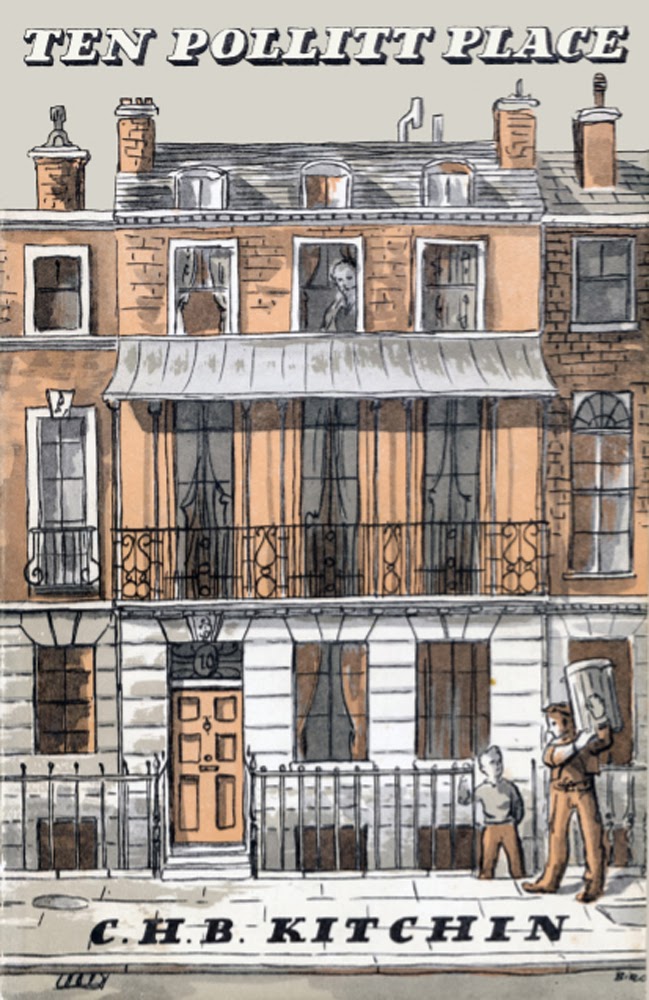
James Kennaway and C.H.B. Kitchin

Exciting new 2014 titles continue to come in: here are a couple more we're particularly thrilled about.


James Kennaway (1928-1968) was highly acclaimed for his novels and was regarded as one of the greatest modern Scottish authors, winning acclaim for books such as Tunes of Glory (1956) (for which Kennaway earned an Oscar nomination when he adapted it for a film version starring Alec Guinness), Household Ghosts (1961), The Bells of Shoreditch (1963), The Cost of Living Like This (1969) and the posthumous Silence (1972). We will be reissuing his 1963 novel The Mind Benders (which he later adapted for the screen in a version starring Dirk Bogarde). In The Mind Benders (1963), Nobel Prize-winning scientist Prof. Sharpey unexpectedly commits suicide following his groundbreaking research into sensory deprivation using isolation tanks. When a suitcase of money is found near his body, Major Hall of British Intelligence suspects Sharpey may have been selling information to a foreign power. Sharpey's colleague, Dr Longman, is determined to clear his friend's name, but to find out why Sharpey killed himself, Longman must undergo a terrifying experiment in the isolation tank, with unexpected and extremely frightening results....

Kennaway died at age 40 after suffering a heart attack while driving his car.  Several of his works have been reissued by the Scottish publisher Canongate Classics, but The Mind Benders makes its first reappearance in 50 years.  Paul Gallagher will provide an introduction.


Meanwhile, one of our favorites, C.H.B. Kitchin (1895-1967), will be back with three new titles -- none of them ever reprinted before -- The Sensitive One (1931), Birthday Party (1938), and the posthumous A Short Walk in Williams Park (1971).  The latter will include a foreword by L.P. Hartley, while David Robinson and Adrian Wright have kindly agreed to introduce the first two.


We expect a flurry of new title announcements over the next few weeks, so keep checking back to see what's in store for 2014!

Monday, December 16, 2013

2014 Preview (part 1)

We're still waiting to hear back from agents or estates on a couple dozen extremely exciting titles, including by some quite prominent authors, so expect a second post in the next couple weeks, but in the meantime, here's a sneak peek at some of what's in store at Valancourt for 2014.


Michael McDowell, the great neglected Southern Gothic novelist and screenwriter of films such as Beetlejuice and The Nightmare Before Christmas whose novel The Amulet we published earlier this year, returns with The Elementals (1981), a different kind of haunted house story that many fans think is one of the scariest horror novels ever written.  


New to Valancourt Books is Michael Talbot (1953-1992), best known for his book The Holographic Universe, and whose first novel, The Delicate Dependency (1982) will be reprinted for the first time ever.  Talbot's novel originally appeared as a paperback original from Avon Books and has gone on to acquire a legendary cult status as one of the best vampire novels ever written.  Secondhand copies are hard to come by and ridiculously expensive, and so strongly has the book stayed with its readers that even 30 years on, the book has 4.34/5.0 on Goodreads.com and eighteen 5-star reviews on Amazon.com. 


Frank De Felitta is best known for his bestseller Audrey Rose (1975), which was also a major feature film; his other big bestseller, The Entity (1978), was also a major film starring Barbara Hershey, and returns to print in a new edition with an introduction by author Gemma Files.  


Another newcomer to Valancourt is Jack Cady (1932-2004), whose works have won the Nebula, Bram Stoker, and World Fantasy Awards; Cady's The Well (1980) returns to print with an introduction by Tom Piccirilli.  


John Blackburn, ten of whose horror novels and thrillers we've published in 2013, returns with four of his best: Children of the Night, A Ring of Roses, Devil Daddy, and Our Lady of Pain.


A number of new authors will be making their Valancourt debuts in 2014.  One of these is George Sims (1923-1999), who, like John Blackburn, was a rare bookseller and the author of critically acclaimed thrillers. Sims's Sleep No More (1966) and The Last Best Friend (1967), the latter of which was chosen by H.R.F. Keating as one of the best 100 crime and mystery novels ever written, will be out next year.


Gerald Kersh has been one of our most popular authors this year, and his novel Fowlers End has been called one of the great comic novels of the 20th century.  But did you know that he had a brother, also a writer, and also a great comic novelist?  Cyril Kersh joins the Valancourt lineup with his first novel, the hilarious and very scarce The Aggravations of Minnie Ashe (1970), which will feature an introduction by Séamas Duffy.


Colin Spencer (b. 1933) is perhaps best known as one of Britain's great writers on food and for his book on the history of homosexuality, but in the 1960s and 70s he was the author of a number of interesting and unusual novels, one of which, Panic (1972), about the psychology of a child murderer, will be joining our list.  


Michael Campbell's novel Lord Dismiss Us (1967) received rave reviews from Iris Murdoch, Anthony Burgess, Christopher Isherwood, and others on its initial appearance. It was revived in 1984 by the University of Chicago Press but has long been out of print and will return with a new introduction by Washington Post critic Dennis Drabelle.


Some of our favorites from 2013 will be returning with new titles in the new year, including Forrest Reid's final novel, Denis Bracknel (1947), four by the great J.B. Priestley (The Doomsday Men, The Shapes of Sleep, The Thirty-First of June, and Salt Is Leaving), two more by Stephen Gilbert (Bombardier, Monkeyface), and two fine novels by John Wain (Strike the Father Dead, A Winter in the Hills).


Fans of our editions of rare 18th and 19th century literature will have several great new titles to look forward to.  Neglected Gothic novelist Henry Summersett returns with Aberford (1798) and The Worst of Stains (1804).  Other Gothics include the anonymous Lusignan; or, The Abbaye of La Trappe (1801) and The Orphans of Llangloed (1802).  Victorian penny dreadfuls in the works include James Malcolm Rymer's The Black Monk (1844) and the second volume of our phenomenally popular The Mysteries of London by George W. M. Reynolds. The excellent Ernest G. Henham, alias John Trevena, returns with another weird Gothic tale, The Feast of Bacchus (1907), while Mary Elizabeth Braddon is back with one of her last novels, Dead Love Has Chains (1907). A. W. Clarke's Jaspar Tristram (1899) gets its first ever republication, and Prof. Jack Voller has put together an excellent anthology of graveyard poetry.  More titles are likely to be added as we receive additional manuscripts from the professors editing them.

Sunday, December 15, 2013

Support independent bookstores!

We're big fans of independent bookstores and are working to get our books available in other places besides Amazon.  We're pleased to announce that a number of our titles are now available from the excellent DreamHaven Books in Minneapolis, MN and Mystery on Main Street in Brattleboro, VT, as well as from the mail-order Ziesings Books in California.

If you'd like to see Valancourt titles at your local independent bookstore, encourage them to contact us. We're offering significant discounts to independent booksellers in order to get our books more widely available.  And, as always, all our titles can be purchased in the US from Amazon or Barnes and Noble's website, and in the UK from Amazon, Foyle's, and other major online bookstores.

Friday, November 15, 2013

Top 10 of 2013

Well, 2013 is winding down, and very soon we'll be posting our list of 2014 releases, which will include some really exciting surprises.  This year we've published a rather shocking 76 new titles and by the end of the year that will probably increase to about 85.  We've introduced a new generation of readers to John Blackburn, John Wain, John Braine, Keith Waterhouse, David Storey, Colin Wilson, Thomas Hinde, and a great many others.  With so many great titles and authors, it's going to be hard to narrow it down to our 10 favorites.  But here goes:

10. Michael Nelson, Knock or Ring (1957) 

Knock or Ring, Michael Nelson's first novel (he's better known for his second, the gay classic, A Room in Chelsea Square, which we'll be reissuing soon) is not a masterpiece, but it's a true joy to read.  A light-hearted story about shady book dealers trying to get their hands on a priceless book at a country auction sale, it's a warm and funny book and pure pleasure from first page to last.


9. R. Chetwynd-Hayes, The Monster Club (1976)

Legend has it that when The Monster Club was being adapted for the screen, the filmmakers contacted Christopher Lee about starring in the film.  Lee asked what the title of the movie was, and as soon as he heard it was 'The Monster Club', he said, 'No'.  Don't make the same mistake!  Yes, it's a somewhat silly, tongue-in-cheek book, but it's also extremely clever and original, and a perfect blend of horror and humor.  We loved it and the finished book, with Stephen Jones's excellent intro and John Bolton's gorgeous cover painting, is one of the best we've ever put together.


8. Gerald Kersh, Nightshade and Damnations (1968)

The neglect of some writers is truly inexplicable, and Kersh is one of those. Copyright problems involving his estate may partly explain why his books were unavailable for so long, but we're thrilled to be part of the Kersh revival.  The tales in this collection are brilliant -- extremely well written, ingeniously contrived, and a nice mix of the humorous and the horrific.  One of my favorites is probably one of the least known in the collection, 'Busto is a Ghost, Too Mean to Give Us a Fright', a grimly funny story of an extremely unsympathetic character whose dog is dying.  Also not to be missed are the classics "Whatever Happened to Corporal Cuckoo?", "The Brighton Monster", and "Men Without Bones".

7. C. H. B. Kitchin, Ten Pollitt Place (1957)

Our friend, the late Francis King, recommended this one, along with Kitchin's equally fine The Book of Life, but unfortunately, despite the efforts of both Valancourt and Faber Finds to reissue Kitchin's novels, the neglect of his work continues unabated.  A shame, since his books are unfailingly delightful, real treasures that deserve reading and rereading.  Interestingly, though not often considered as a writer of the occult and supernatural, these themes run very strongly through both his novels we've reissued; in Ten Pollitt Place, they manifest in Hugo, the disabled boy who has the ability to see the future and forecasts the death of one of the residents of 10 Pollitt Place.  Who will die?  You'll have to read and find out.


The neglect of every writer on this list is puzzling, but perhaps none more so than David Storey.  His novels have won every award there is, including making the Booker shortlist twice and winning it once, and his first book, This Sporting Life (1960), was adapted (by Storey) for a classic film.  Not content with success as a novelist, he also won the New York Drama Critics Circle Award for the best play of the year three times in the 1970s.  Of the three Storey novels we've published, Pasmore is probably the most accessible.  It's the story of a 30-year-old man who suddenly finds his life disintegrating for no reason he can discern: he's lost all love for his children, cannot bear the presence of his wife, and has lost all interest in his work. Perhaps the most quietly terrifying book you're likely to find and told with the same unique sense of detachment that characterizes Storey's Booker winner Saville.  A great book.

5.  J. B. Priestley, The Other Place (1953) and The Magicians (1954)

If anyone can explain why every single one of Nevil Shute's books -- even the not-very-good ones that no one's ever heard of -- is in print, while almost none of J. B. Priestley's are, I'd love to hear it.  I've paired the story collection The Other Place with the novel The Magicians, since they were published back-to-back and deal with the same themes.  Both are concerned with Priestley's philosophy of time and with his horror at the increasing mass consumerism he saw springing up in the 1950s. One imagines he rolls over in his grave every time people queue up to sleep on the sidewalk waiting for the new iPhone model to be released.  Both these books -- like almost everything else Priestley ever wrote -- are sheer delight from beginning to end, charming, warm, and funny; the kind of books that can actually leave you with a smile on your face at the end.  How many modern writers can make that claim?  If you haven't made J. B. Priestley's acquaintance yet, you owe it to yourself to try one of his books. He'll never disappoint.

4.  John Wain, The Smaller Sky (1967)

I suspect I'd have rated this book even higher if I'd read it when I was 19 and greedily consuming everything that the likes of Camus and Sartre wrote.  It's a very minimalist story, a study of despair and alienation, in the person of a middle-aged man who suddenly finds he can no longer bear the feeling of being overwhelmed by life and the world and takes refuge inside London's Paddington Station, where he feels safe and sheltered beneath the 'smaller sky' of the station's roof.  John Wain has a highly individual voice that comes through in this and his other books, and he's a writer well worth taking the time to discover.  We're releasing two more of his in 2014.


Billy Liar has never been out of print in the UK, where it's justly revered as a classic.  By contrast, it's been out of print in the States for over 50 years.  I have to confess, I never would have heard of this book but for the fact that it gave its name to a song by one of my favorite bands, The Decemberists (they also named one after David Storey's This Sporting Life).  Billy Liar tells the story of one Saturday in the life of young William Fisher, whose overactive imagination leads him to tell lies constantly, leading him into all kinds of trouble -- he has three girlfriends (two of whom he's engaged to marry) and problems with his boss and his parents. The stolen calendars under the bed, Billy's affectation of a Yorkshire accent while talking to his boss, his attempts to ignite passion in his frigid girlfriend by squishing 'passion pills' into pieces of chocolate candy, and many other scenes and plot elements are unforgettable.  We were also thrilled to track down William Belcher, now in his 90s, who designed the original jacket and who kindly allowed us to reuse it -- one of the most iconic British dust jacket designs of the 1950s.

3. John Braine, Room at the Top (1957)

Another book that has never been out of print in the UK but has been unavailable in the States for 50 years, I think Room at the Top is still considered by many to be a 'bestseller' and a key social document of the time, but to me the book is quite simply a classic of British literature.  Braine's novel was a runaway critical and popular success and today, nearly 60 years later, it's still explosive and still holds up on reading and rereading.  I loved it.  Joe Lampton, the narrator and protagonist, who has grown up in poverty and lost his parents to the war, is determined to reach 'the top' and achieve social and material success, with terrible and tragic consequences.  This is a brilliant novel.  Read it.  (An aside: a recent Amazon customer complained about the 'poor' cover of our edition, which he didn't feel stacked up to the film still used on an old Penguin paperback.  We love the cover, which is the original 1957 dust jacket art by the important gay artist John Minton.)


Forrest Reid died in 1947, and still no one has come along to supplant him as the greatest Ulster novelist.  Brian Westby, by far his scarcest book, is the only of his novels not tinged with aspects of fantasy or the supernatural.  It's also -- possibly -- his masterpiece (he wrote so many fine novels that it's hard to choose one).  Even if you know nothing of the back story, the book is extremely compelling: the plot involves an aging novelist who meets the teenaged son he didn't know he had and tries to win his affections and ultimately tries to take him away from the boy's insane religious freak of a mother.  But once you know the back story (as explained in this edition by Dr Andrew Doyle in his introduction), it takes on a whole new level of meaning and interest.  The entire book is a thinly veiled portrayal of Reid's friendship with the teenaged Stephen Gilbert, who after Reid's death wrote a rather unflattering portrayal of their relationship from his own point of view in The Burnaby Experiments (1952).  The character of 'Brian Westby' in the novel is a portrait in words of Stephen Gilbert, and as you learn more about the facts of Reid's and Gilbert's lives, you can come to appreciate more and more what an unprecedented achievement the novel really is.


Way back in late 2007, we published Francis King's An Air That Kills (1948), the first 20th century novel we ever published, and for a long time an aberration in a catalogue comprising mostly 18th and 19th century texts.  From 2007 till shortly before his death in 2010, we had the pleasure of corresponding regularly with Francis, and he expressed his wish that this novel, the second of the 50 volumes he'd eventually publish, would be reprinted.  It was originally issued in 1947 by the firm of Home and Van Thal, a relatively new publisher that was never well off financially and folded not long after.  One suspects that if Never Again had been released by a better publisher, it would have entered the canon of classic twentieth century fiction, for it is quite simply a masterpiece.  Any attempt to describe the plot would fail to convey the excellence of the book as a whole; you'll simply have to read it.


1. Claude Houghton, I Am Jonathan Scrivener (1930)

Not just my favorite release of this year, but one of the best novels I've ever read. Curiously, Houghton's novel isn't really a 'mystery', a 'suspense novel', or a 'thriller', and yet it's extremely mysterious, very suspenseful, and unflaggingly thrilling. It's also very wise and very, very funny.  One of the early editions of the novel had a quote from Ralph Straus of the Sunday Times on the front of the jacket, saying, 'I defy anybody to put the book down until the last page be reached.' Aside from the old-fashioned use of the subjunctive, his quote holds true nearly 85 years later: to use a modern coinage, the book is 'unputdownable'. Several scenes and characters are highly memorable, and the book contains so many quotable wise, clever, and very funny observations that I guarantee you'll find posting them on Twitter or Facebook irresistible. We're grateful to Michael Dirda for allowing us to print his essay as a foreword, which has helped some people discover the volume.  If you enjoy this one, do not miss his This Was Ivor Trent, which is in many ways a similar novel, but is also very well worth reading and contains at least one unforgettable character.

Friday, September 27, 2013

Coming soon: Three novels by Gillian Freeman

We've been working to add more women writers to our 20th century list, and we're extremely pleased to be able to announce that we've signed three early novels by Gillian Freeman (b. 1929): The Liberty Man (1955), The Leather Boys (1961), and The Leader (1964).


Like many terrific novelists who got their start in the 1950s and 60s, Freeman was initially connected with Anthony Blond, who was first her literary agent and later her publisher.  Blond is best known, of course, for discovering and publishing Simon Raven, and the list of other young authors he helped discover -- which includes a number of Valancourt authors like David Benedictus, Jennifer Dawson, and Colin Spencer -- is formidable.

Freeman's books are consistently engaging reads and often dealt with controversial topics.  Her first book, The Liberty Man, deals with a taboo romance between a middle-class schoolteacher and a sailor of rather dubious sexuality, who happens to be the brother of one of her pupils (one memorable scene finds her accompanying him to a gay sailors' bar).  The book was one of the best-reviewed novels of 1955 and was reprinted in paperback through the 1970s but has been out of print for some time.  This is the first edition's cover:


Freeman is probably best known for The Leather Boys (1961), which was filmed by Sidney Furie in 1964, and which was reprinted in the 1980s as part of the Gay Men's Press Gay Modern Classics series.  Racy by 1961 standards, this short novel follows two working-class youths in a biker gang (hence the title, 'leather boys') who fall in love, with the relationship of course ending in tragedy.  The book was originally published under the pseudonym of 'Eliot George' (a play on yet another pseudonym, George Eliot), perhaps out of fear of controversy.  Acclaimed novelist Michael Arditti, whose new book The Breath of Night was just published in the UK by Arcadia Books to rave reviews, will provide an introduction.  The original cover, and some others:


The third of our reissues, The Leader (1964), concerns a loser, Vincent Pearman, about forty years old, still living with his mother (his only friend) and working at a dead-end job in a bank.  Pearman is bitter about his failed life and has managed to convince himself that the problems in his own life and in the country as a whole are attributable to racial and religious minorities.  A collector of Nazi memorabilia, Pearman comes into contact with other crazy right-wingers like himself and begins a political party, Britain First, whose platform is anti-immigrant, anti-Jew, and anti-black.  The novel charts his rise and fall in a book that resonates eerily today, with the rise of crazy far-right political extremists in the US and throughout the world. Historian and critic Alwyn Turner, whose excellent 'Trash Fiction' website contains reviews of several of Freeman's books (http://www.trashfiction.co.uk/leader.html), will provide an introduction.


We hope to have these three novels out in early 2014.  A fun Gillian Freeman fact to close this post with: her 1978 novel Nazi Lady, published as though it were actually the memoirs of a well-connected woman of the Third Reich, is so convincing that a 2004 anthology of World War II diarists mistakenly presented excerpts of the book as fact: http://www.theguardian.com/books/2004/dec/11/featuresreviews.guardianreview29

Friday, September 6, 2013

September preview

September is shaping up to be a really exciting month for new releases.  Here's what you can expect from Valancourt this month:
  • A deluxe, illustrated hardcover edition of perhaps the greatest horror classic of all time, The Monk, with an introduction by the great modern master of horror, Stephen King.
  • A rediscovered Gothic text from 1800 by an unjustly forgotten author, in a hardcover collector's edition.
  • A scholarly hardcover edition of a rare gay Victorian text so scarce that it survives in only one known copy, at the British Library.
  • Our seventh reissue from John Blackburn, and it's one of our favourites to date.
  • More rediscovered 20th century authors: Andrew Sinclair and Sir Charles Birkin.
  • A never before reprinted masterpiece from Forrest Reid.
I don't even know how it could get any more exciting than that, unless we were issuing our first Booker Prize-winning novel . . . oh, wait -- we're doing that too.  And if you think all of that sounds exciting, just wait till you see some of what we're planning for 2014....


Thursday, August 29, 2013

Introductions

We are presently looking for authors, critics, or academics interested in introducing books by the following authors for our series of neglected 20th century fiction: J. B. Priestley, John Lodwick, Martyn Goff, and John Blackburn.

Additionally, though we do not presently have more titles contracted by the following Valancourt authors, we would be pleased to hear from anyone who would be interested in introducing a future volume, should we in future acquire the rights to other titles by that author: Michael McDowell, Gerald Kersh, Francis King, John Wain, John Braine, David Storey, Basil Copper, Andrew Sinclair, Piers Paul Read, Charles Beaumont, Colin Wilson.